
Most landlords think incentives mean discounts.
A free month. Reduced rent. Maybe a gift card tossed in at move-in like a party favor.
Sometimes that works. Often, it does not. And in places like Bothell, where renters are a little more discerning and a little less impressed by gimmicks, incentives tied only to price tend to age poorly.
What actually keeps good tenants around usually has less to do with rent reductions and more to do with how living in the property feels, day after day. Convenience. Respect. A sense that someone is paying attention.
That sounds soft. It is not. Retention is expensive to lose and surprisingly cheap to protect.
The trick is knowing which incentives matter and which ones quietly backfire.
Why incentives matter more after move-in
Most marketing energy goes into getting a tenant through the door. That makes sense. Vacancy is loud. Empty units cost money.
But the quieter cost shows up later. Turnover. Cleaning. Re-marketing. Lost time. The subtle wear of starting over again and again.
In Bothell’s rental market, many tenants are not hopping around for fun. They are staying put if things work. When they leave, it is often because the experience eroded, not because the rent went up by fifty dollars.
This is where incentives tied to retention start to make sense. Not as bribes, but as signals. Signals that the landlord or property manager values stability and understands how renters actually live.
Incentive #1: Flexibility that respects real life
Rigid rules feel safe on paper. In real life, they tend to create friction.
Small flexibilities go a long way. A little grace on move-in dates when possible. A reasonable window for lease renewals. The ability to transfer utilities without panic if something goes sideways for a week.
These are not loopholes. They are acknowledgments that tenants are people, not line items.
Flexibility does not mean chaos. It means clear policies that allow for discretion. The kind of discretion that prevents a minor inconvenience from becoming a major resentment.
You can further learn about handling tenant complaints without damaging the landlord-tenant relationship, where process and tone often matter more than the final answer itself.
Incentive #2: Upgrades tenants actually notice
Tenants rarely get excited about new insulation or updated wiring. Those matter, but they are invisible.
What they do notice is faster internet readiness. Smart thermostats. Keyless entry. Better lighting. Simple things that make daily routines smoother.
These upgrades do not need to be extravagant. They need to be intentional.
A smart lock does more than modernize the property. It reduces lockout calls. A programmable thermostat cuts utility complaints. Suddenly, the incentive benefits both sides.
This is one reason many property managers lean into practical upgrades instead of cosmetic ones. They tend to reduce friction while quietly improving retention.
Incentive #3: Maintenance that feels proactive, not reactive
Nothing kills goodwill faster than feeling ignored.
Tenants rarely expect perfection. They do expect responsiveness. More importantly, they notice when maintenance happens before something breaks completely.
Seasonal check-ins. HVAC servicing. Gutter cleaning that happens without prompting. These are not flashy incentives, but they are powerful ones.
Proactive maintenance sends a clear message. Someone is paying attention. Someone cares if this place stays comfortable.
That message often matters more than a one-time discount ever could.
Incentive #4: Renewal incentives that are not about lowering rent
When renewal time comes around, many landlords default to one lever. Price.
Sometimes that lever works. Often, it creates a race to the bottom or sets expectations that are hard to unwind later.
Renewal incentives can take other forms. A professional carpet cleaning at renewal. A fresh coat of paint in a high-traffic area. A small appliance upgrade that has been on the tenant’s wish list.
These incentives feel personal without being expensive. They also avoid resetting the rent baseline in a way that causes problems down the road.
This aligns closely with ideas covered in how rent increases affect tenant retention in Bothell, where perceived value often outweighs the actual dollar amount.
Incentive #5: Communication that is predictable
This one does not show up on incentive lists very often, but it probably should.
Tenants value knowing what will happen next. When inspections occur. How renewals work. Who to contact and when.
Predictable communication reduces anxiety. Less anxiety leads to fewer complaints. Fewer complaints lead to longer stays.
It is not glamorous. It is effective.
Many landlords underestimate how much stress comes from uncertainty rather than from rules themselves.
When incentives backfire
Not every incentive helps.
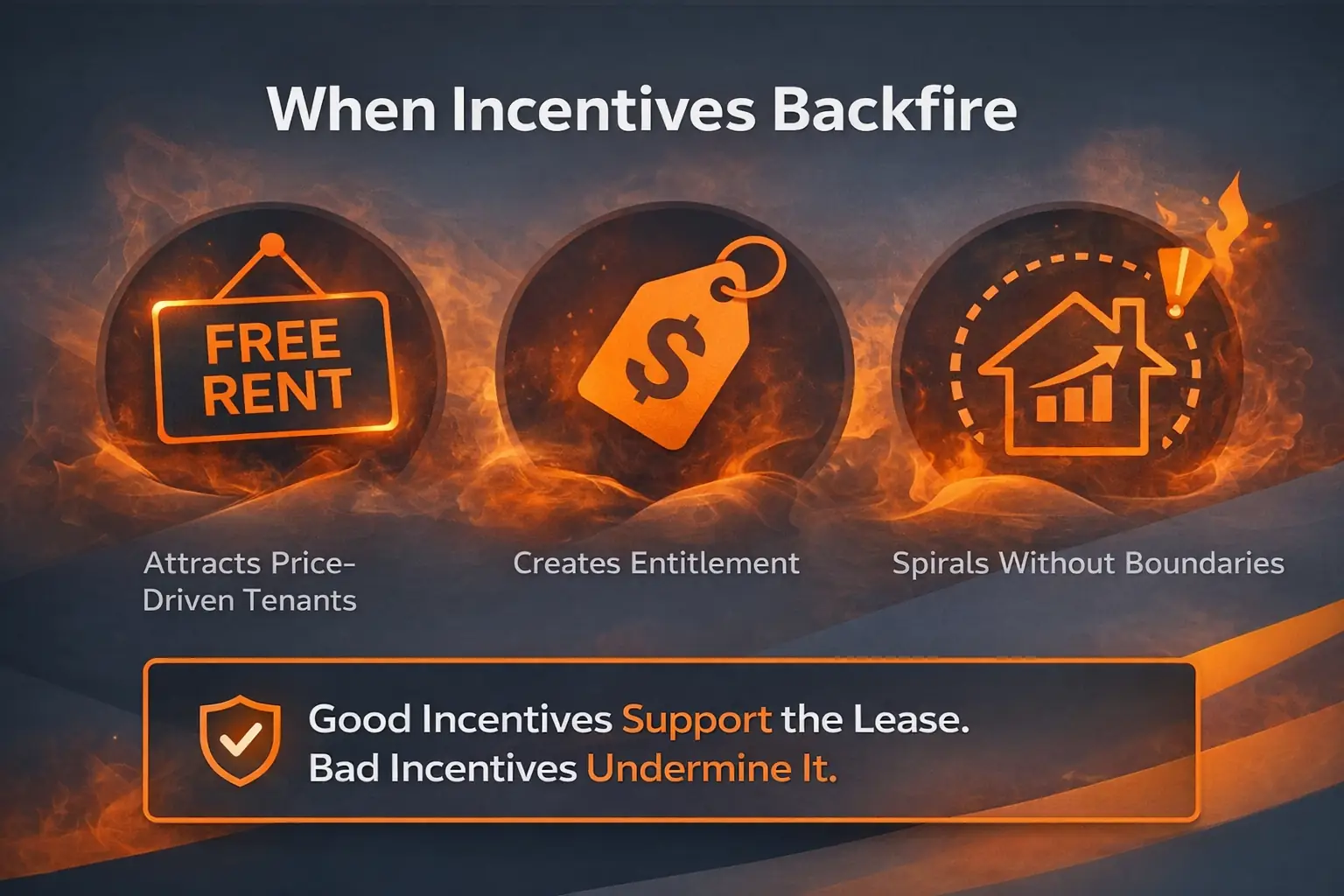
Free rent concessions can attract tenants who are motivated primarily by price and more likely to move again. Over-promising flexibility can create entitlement. Offering upgrades without setting boundaries can spiral quickly.
The goal is not to say yes to everything. It is to say yes to the right things.
Good incentives support the lease. They do not undermine it.
The role of property management in making incentives work
Incentives tend to fail when they are applied inconsistently.
One tenant gets flexibility. Another does not. One gets an upgrade. Another feels overlooked. Suddenly, what was meant to build goodwill creates tension.
This is where experienced property managers earn their keep, often quietly.
By standardizing which incentives are offered, when they apply, and how they are communicated, property managers remove guesswork. They help landlords avoid emotional decisions and focus on patterns instead of one-off situations.
That consistency is often what makes incentives sustainable instead of stressful.
It is also why retention strategies discussed in How to Get Tenants to Renew Leases in Bothell, WA tend to work better when systems, not instincts, are driving decisions.
Incentives are not about being generous
This is the part many landlords miss.
Effective incentives are not acts of generosity. They are risk management tools.
They reduce turnover. They reduce conflict. They protect cash flow. They make rental ownership more predictable.
In Bothell’s market, where tenants have options, the experience often becomes the differentiator long after the listing comes down.
The lease gets someone in the door. The experience keeps them there.
A quieter strategy that compounds
The best incentives do not announce themselves. They compound over time.
Fewer complaints. Longer tenancies. More respectful communication. Less urgency around renewals.
That is not accidental. It is the result of choosing incentives that support how people actually live.
At PMI Equitas, we tend to think about incentives this way. Not as giveaways, but as tools that protect both the property and the relationship. When incentives are aligned with systems, they stop feeling risky and start feeling obvious.
If you are rethinking how you approach tenant retention in your Bothell rental, it may be worth looking at which incentives you are using and which ones you are relying on out of habit. We are always happy to talk through what tends to work long-term and what usually creates more noise than value.
FAQs
1. Do tenant incentives really improve retention?
A: Yes. When incentives focus on experience, communication, and convenience, tenants are more likely to renew and stay longer.
2. Are rent discounts the best incentive for tenants?
A: Not always. Discounts can attract short-term tenants, while experience-based incentives often support long-term retention.
3. What incentives matter most to Bothell renters?
A: Flexibility, responsive maintenance, practical upgrades, and predictable communication tend to matter more than one-time perks.
4. Can incentives increase rental costs long-term?
A: Poorly chosen incentives can. Strategic incentives often reduce overall costs by lowering turnover and vacancy.
5. Should landlords manage incentives themselves or use a property manager?
A: Property managers help standardize incentives, reduce inconsistency, and prevent incentives from creating unintended risks.
