

It usually starts with a simple message. “Would it be okay if we painted the living room?”
On the surface, it feels harmless. A tenant wants to personalize the space. Make it feel like home. Maybe swap out beige for soft blue. Or something more ambitious.
For landlords, though, that question can trigger a quiet calculation. Resale value. Turnover costs. Future repainting. Boundaries.
The issue of tenant customization rental Bothell properties is becoming more common, especially as renters stay longer and expect more flexibility. The real question is not whether customization should be allowed. It is how to approach it strategically.
Because saying yes blindly creates risk. And saying no automatically can create friction.
Why customization requests are increasing
Bothell’s rental market has shifted. Many tenants are not viewing rentals as temporary holding spaces. They are settling for multiple years. Remote work has also changed how people use their homes. Walls are now backdrops for video calls. Spaces double as offices.
Understanding what today’s Bothell tenant profile typically values in a rental helps explain the trend. Comfort and personalization matter more than they did a decade ago.
At the same time, landlords must protect long-term asset value. That balance is where lease customization rules become essential.
The risks of automatically allowing paint
When landlords decide to allow tenants to paint Bothell rentals without structure, problems tend to surface later.
Bold colors that are difficult to cover. Poor-quality application. Inconsistent finishes. Damage to trim or flooring.
Repainting after move-out can become more expensive than anticipated, particularly if multiple coats are required to restore neutral tones. The issue is not paint itself. It is control.
Customization without clear lease customization rules creates ambiguity. Ambiguity invites disagreement at move-out.
The risks of automatically denying requests
On the other hand, rigid refusal can also carry consequences. Tenants who feel unheard may interpret the decision as inflexible management. That perception can influence renewal decisions.
Sometimes, small accommodations increase satisfaction and retention. The key is to distinguish between reasonable personalization and structural alteration.
This is where handling tenant complaints without escalating tension becomes relevant. Tone and explanation often matter as much as the decision itself.
A practical framework for paint requests
Instead of a yes-or-no policy, many landlords adopt conditional approval.
For example:
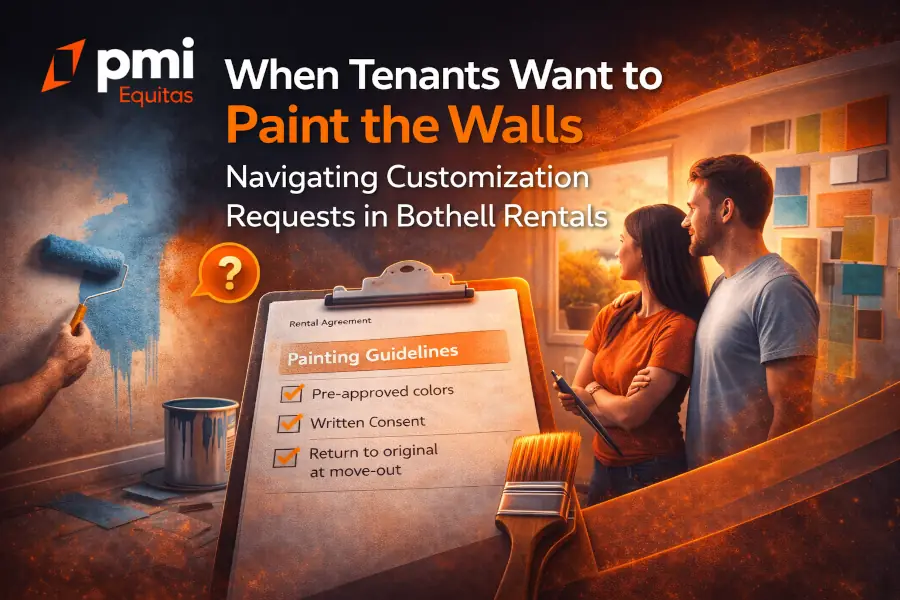
Only neutral or pre-approved color palettes
Professional-quality paint required
Written approval before work begins
Tenant responsible for returning walls to original color at move-out
These boundaries support tenant customization rental Bothell requests without compromising future leasing potential.
Clear lease customization rules reduce emotional negotiation and create predictable outcomes.
Deposits and documentation
If you decide to allow tenants to paint Bothell properties, documentation matters. Photograph walls before and after. Specify expectations in writing. Clarify whether repainting must occur before move-out or whether costs may be deducted from the security deposit.
Transparency prevents surprise.
Disputes at move-out often stem not from customization itself, but from mismatched expectations.
This is also why how structured lease enforcement protects both landlord and tenant becomes critical. Consistent enforcement ensures that policies feel fair rather than arbitrary.
When customization signals something positive
Interestingly, customization requests can sometimes indicate positive tenant behavior.
Tenants who want to paint are often planning to stay. They are investing effort into the space. That can be a good sign.
From a retention standpoint, flexibility within reason can support long-term occupancy. And long-term occupancy reduces turnover costs.
In these cases, the conversation shifts from “Should I allow this?” to “How can I structure this wisely?”
Red flags to watch for
Not every request is low-risk.
Bright, unconventional colors. Requests that extend beyond paint into flooring or cabinetry. Tenants who resist written agreements.
These situations require caution.
Effective tenant screening and clear communication from the start often reduce problematic customization scenarios. Landlords who establish expectations early encounter fewer boundary-testing requests later.
Customization conversations are rarely isolated from broader management practices.
Generational influence on expectations
Younger tenants, especially those influenced by design trends and social media, often prioritize personalization. This aligns with broader demographic shifts in Bothell’s renter population.
Again, understanding what today’s Bothell tenant profile typically values in a rental helps frame decisions.
Customization may feel modern and tenant-friendly. But the property remains an investment first.
Lease customization rules exist to protect that reality.
The long-term ROI perspective
From a purely financial standpoint, the impact of allowing tenants to paint Bothell rentals depends on turnover patterns.
If a tenant stays three to five years and repaints professionally upon exit, the financial effect may be minimal.
If turnover is frequent and repainting is required repeatedly, costs compound.
When evaluating tenant customization rental Bothell decisions, landlords should consider:
Average tenancy length
Cost of repainting per room
Market preference for neutral tones
Current condition of walls
Small differences compound over time, especially in multi-unit portfolios.
The middle ground approach
A balanced strategy often works best.
Allow limited personalization within defined parameters. Provide written guidelines. Inspect before and after completion. Clarify responsibilities. This approach respects tenant autonomy while maintaining asset protection.
It also reduces the risk of disputes that can damage relationships or escalate unnecessarily. And when customization requests are handled consistently, they become less stressful over time.
Where professional structure helps
Customization policies often feel simple until the first dispute. Property managers frequently develop standardized lease customization rules that anticipate common scenarios. That structure removes guesswork and reduces inconsistency between tenants.
It also prevents emotionally driven decisions that vary from case to case.
At PMI Equitas, we approach customization requests through that lens. Not as inconveniences, but as management decisions with financial implications. If you are unsure how to structure paint or alteration policies in your Bothell rental, we are happy to help design guidelines that protect your property while maintaining tenant satisfaction.
FAQs
1. Should landlords allow tenants to paint in Bothell rentals?
A: It depends. Conditional approval with clear lease customization rules often balances flexibility and asset protection.
2. What risks come with tenant customization rental Bothell properties?
A: Poor workmanship, difficult-to-cover colors, and disputes over security deposits are common risks.
3. How can landlords create effective lease customization rules?
A: Specify approved colors, require written consent, document changes, and outline repainting responsibilities clearly.
4. Does allowing customization improve tenant retention?
A: It can. Tenants who personalize a space may be more likely to stay longer.
5. Should customization policies be standardized?
A: Yes. Consistent policies reduce disputes and protect long-term property value.
